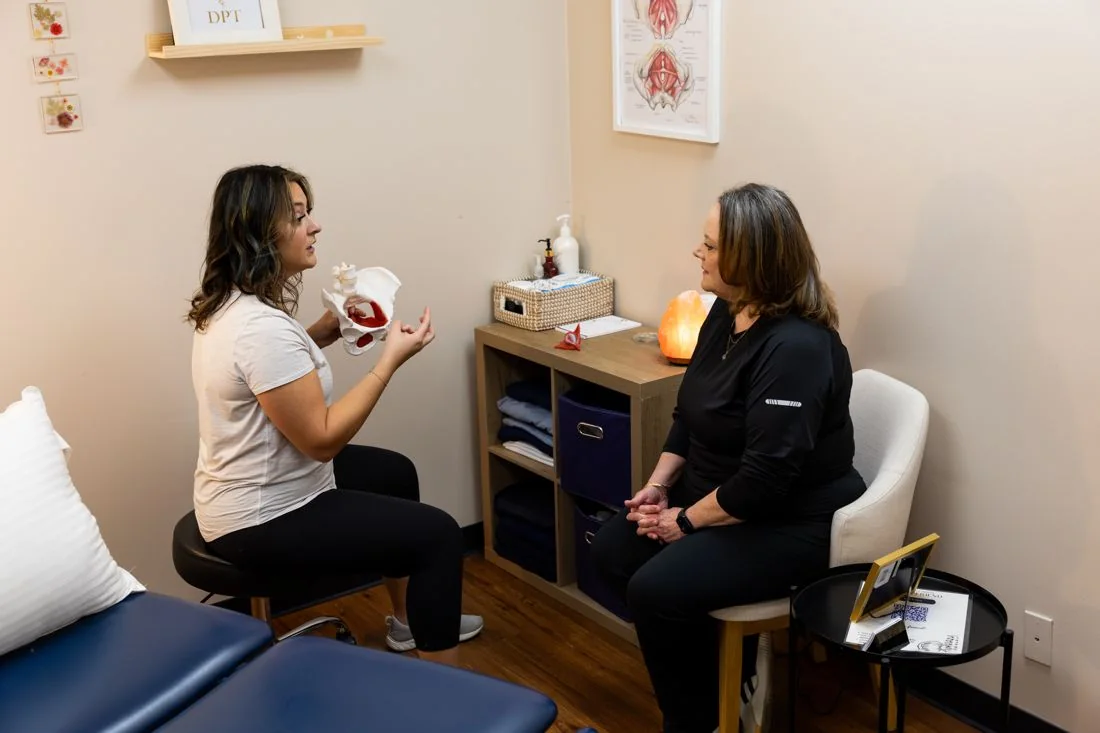
Perimenopause and menopause can bring new leakage, dryness, pain, or pressure, even if you never had pelvic floor issues before. It's a real, physiological shift, and it's treatable.
For women navigating hormonal change and their pelvic floor together.
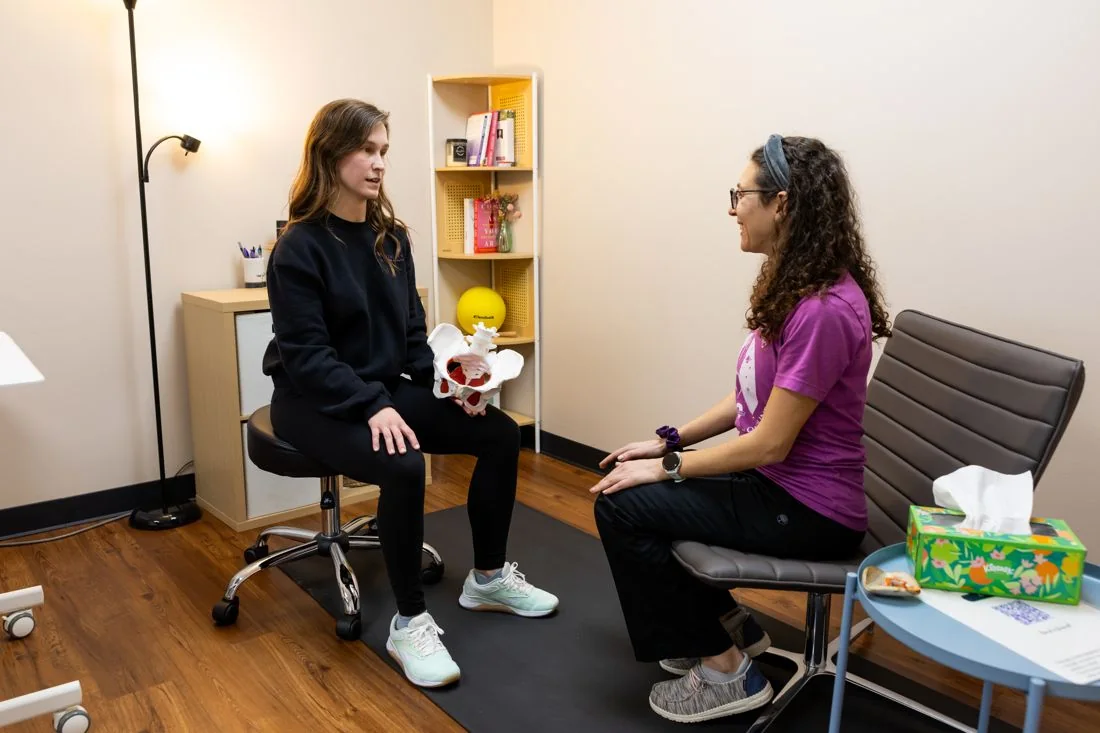
Hormonal changes affect the pelvic floor directly, here's what that tends to look like.
“I never used to leak, and now I do, seemingly out of nowhere.”
New leakage that wasn't there before“Sex has started to feel uncomfortable or painful.”
New discomfort with intimacy“I feel more pressure and heaviness than I used to.”
New or worsening pelvic pressureEstrogen supports the strength and elasticity of pelvic floor and vaginal tissue. As it declines through perimenopause and menopause, women who never had pelvic floor issues can develop new leakage, dryness, discomfort with sex, or a feeling of pressure. Pelvic floor physical therapy addresses the muscular and tissue changes directly.
We assess your pelvic floor with your current life stage in mind, not a one-size approach.
Whether this is your first pelvic floor issue ever, or a return of something from years ago.
Pelvic floor PT works alongside anything else you're doing for perimenopause or menopause symptoms.
You don't need to self-diagnose before you call. This just helps you see we've treated exactly this before.
Women with new leakage in their 40s and 50s
No pregnancy or childbirth involved, symptoms that simply started as hormones shifted.Women with new pain or dryness during sex
Discomfort that wasn't there in earlier years and doesn't feel like it should just be accepted.Women noticing more pelvic pressure or heaviness
A change that's gradual but noticeable, especially by the end of the day.Anyone whose old symptoms are coming back
Prior postpartum issues resurfacing as hormones change again.Menopause-related pelvic changes are real and physical. Here's how we address them directly.
2,000+ women helped
It's common, and there's a real physiological reason for it. Declining estrogen affects the strength and elasticity of pelvic floor and vaginal tissue, which is why new symptoms can appear even without pregnancy or childbirth involved. It's treatable, not something you have to just tolerate.
Yes. Hormonal changes can affect tissue elasticity and pelvic floor tension, both of which contribute to discomfort. A pelvic floor evaluation identifies what's driving your specific symptoms and builds a plan around it.
This is a common pattern. The muscular and tissue changes of menopause can bring back symptoms that were previously resolved, or reveal a weakness that was being compensated for until now. The good news is the same physical therapy approach that helps postpartum issues works here too.
No. If you're noticing new or changing pelvic symptoms during perimenopause, at any stage, we can evaluate what's going on and build a plan from there.
No. Oklahoma allows direct access to physical therapy, so you can schedule with us directly.
A short, low-pressure first conversation. Tell us what you're dealing with, and we'll help you figure out the next step.