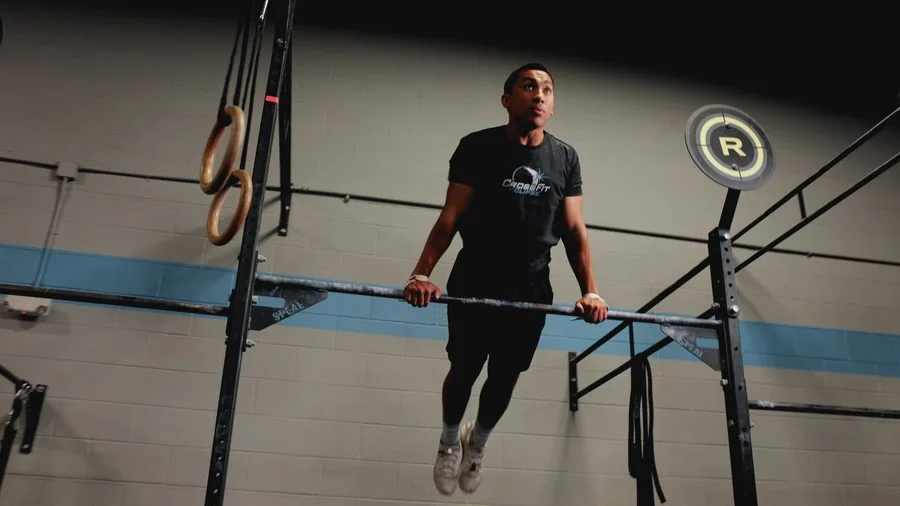
A CrossFit injury doesn't mean you stop showing up to the box. It means something in your mobility, stability, or movement pattern needs work. We find what's actually behind the pain and rebuild it, so you get back to WODs and competition instead of just scaling around it.
For CrossFitters, weightlifters, and competitive athletes.
CrossFit injuries show up differently for everyone, a rough landing on a box jump, a snatch that tweaked something, a WOD you had to scale halfway through. Here's the cycle almost everyone describes.
“It's fine during warmup, then the first heavy set and it's a different story.”
Pain that shows up under load“I had to scale the last two rounds of the WOD again.”
The movement that always gets you“I've rested it, mobilized it, rested it again, and it just comes back.”
Relief that never actually lastsCrossFit injuries are rarely just about the lift or the rep that hurt. Poor mobility, a stability gap, or an old imbalance often shows up during the exact movements CrossFit demands, overhead positions, deep squats, high-rep cycling. Resting alone leaves the real cause free to show up again the next time you load it.
We test your overhead position, squat depth, and hip and ankle mobility together, not just the joint that's sore.
CrossFit injuries are rarely a single-joint problem. We check what's overloading it from above and below.
Olympic lifting, gymnastics movements, and high-rep conditioning all load your body differently, your plan is built around what you actually do at the box.
You don't need to self-diagnose before you call. This just helps you see we've treated exactly this before.
You tweaked something during a workout or a competition, and it's threatening to sideline your training. We find what let the load shift there in the first place, so you can load it again with confidence.
You're new to the sport and something already hurts, before you even know if this is normal soreness or a real issue. We help you figure out which it is, and build the mobility and stability your new movements demand.
It feels like something new pops up every few months, and you've started assuming that's just part of doing CrossFit. It usually isn't. We find the underlying pattern driving the repeat injuries, not just the one that hurts this week.
Snatches, jerks, muscle-ups, and handstand work all demand shoulder positions most people never train elsewhere, and they'll find any instability you're carrying. We build the strength and control those positions actually require.
Someone told you CrossFit is the problem and you should just stop. That's rarely the real answer. We look at your specific movement patterns and build a plan that gets you back to training, not away from it.
Rest alone almost never fixes a CrossFit injury for good. It pauses the symptom until you're back at the box, and the same weak link overloads again. Here's how we actually break that cycle.
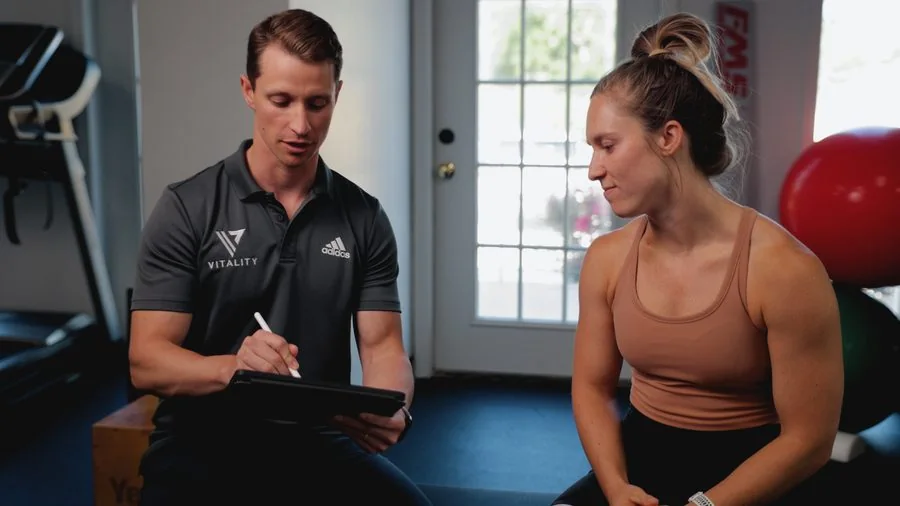
“I came to Vitality in 2021 after a hip injury left me unable to squat just 6 weeks before I was due to compete at the USA Weightlifting National Championships. Cord was able to expedite my recovery so that I could compete. Since 2021, I've been going to Vitality weekly to prevent injury, recover efficiently, and allow my body to keep up with the training demand of weightlifting.”
Usually not entirely. We'll tell you honestly if a short break or specific movement modifications are needed, but the goal is almost always to keep you training, not pull you out of the gym, while we fix the underlying issue.
Yes, that's actually one of the most common patterns we see. Rest alone rarely fixes it, we rebuild the mobility and stability your specific movement is missing so it stops being a variable under load.
Soreness that fades in a day or two and doesn't change how you move is usually normal. Pain that's sharp, one-sided, or changes your form is worth a full evaluation, we'll tell you honestly which one it looks like.
No. Oklahoma allows direct access to physical therapy, so you can schedule with us without a physician referral. Most CrossFit-related injuries can be accurately assessed without imaging, and we'll let you know if imaging is warranted after your evaluation.
Rarely. Recurring injuries usually persist because the root cause, often somewhere else in the kinetic chain, was never identified, just rested until quiet. A thorough evaluation can often uncover what was missed.
A short, low-pressure first conversation. Tell us what you're dealing with and what keeps interrupting it, and we'll help you figure out the next step.