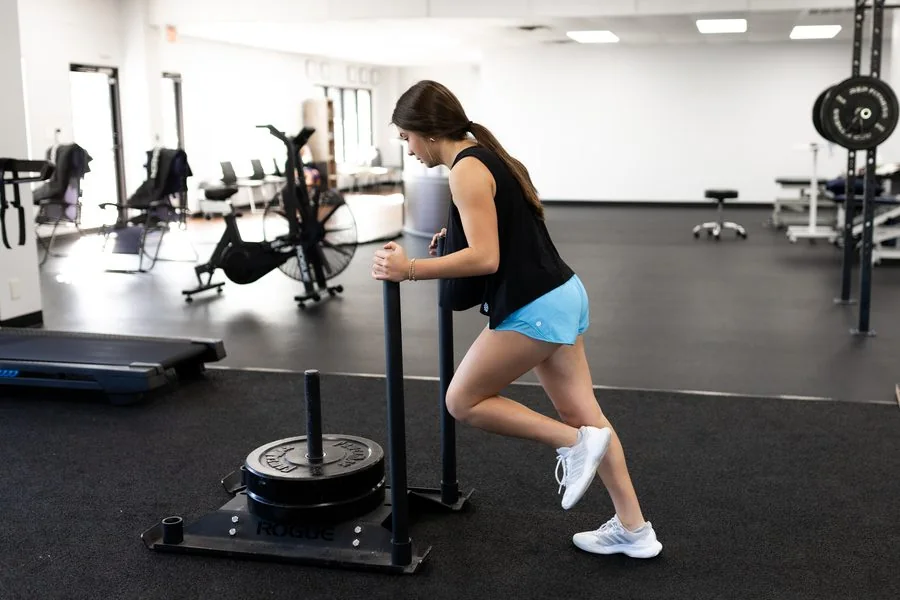
Knee pain from your position, a low back that locks up after long rides, numbness you've just learned to live with, most PT clinics never touch the actual bike-fit and movement issues behind it. We find what's driving it and rebuild it, so you get back to full rides instead of just working around the pain.
For road cyclists, gravel riders, and triathletes.
Cycling pain shows up differently for everyone, a low back that tightens up an hour into a ride, a knee that never quite feels right, numbness that's become normal. Here's the cycle almost everyone describes.
“It's fine for the first 20 miles, then my low back locks up.”
Pain that shows up the longer you ride“My hands and feet go numb about halfway through every ride.”
The numbness you've just learned to live with“I've adjusted my saddle, tried new shoes, stretched more, and it still shows up.”
Relief that never actually lastsCycling pain is rarely just about the bike. Weak hips, a stiff thoracic spine, or poor core control often show up only after an hour in an aggressive riding position, the joint or nerve stuck absorbing the load. A bike-fit adjustment alone leaves the real cause free to keep showing up.
We test your hip, spine, and shoulder mobility together in and out of your riding position, not just the joint that's sore.
Cycling pain is rarely a single-joint problem. We check what's overloading it from above and below.
Long road rides, gravel, and indoor trainer sessions all load your body differently, your plan is built around what you actually ride.
You don't need to self-diagnose before you call. This just helps you see we've treated exactly this before.
It's fine off the bike, but an hour or two into a ride, your low back tightens up or starts to ache. We look at your hip and core control in the riding position, not just the muscle that's sore.
Hours in a fixed hip-flexed position can leave your hips tight and irritate the nerves that run through them, even on long training rides. We look at your hip mobility and position together to find what's actually behind it.
An aggressive, hunched-forward riding position puts a real demand on your neck and shoulders, and it shows up as tightness or pain that doesn't fully go away between rides. We build the stability and mobility that position actually requires.
Nothing ever happened, no fall or injury, but your knee just doesn't feel right on the bike. That's usually a positioning or mechanics issue, not damage, and it's very fixable once we find it.
Nothing hurts badly enough to call it an injury, but something feels off on the bike and you're not sure who to even ask. A full evaluation is a good place to start, whether or not it turns into ongoing treatment.
A bike-fit tweak alone almost never fixes cycling pain for good. It masks the symptom until you're back in the saddle for a real distance, and the same weak link overloads again. Here's how we actually break that cycle.
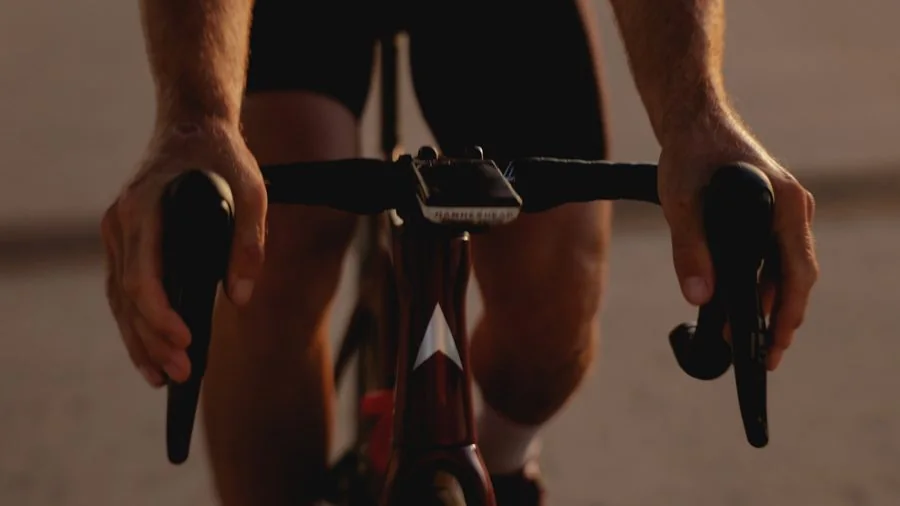
“I had lower back, hip, and knee pain for years. I had tried many things to alleviate the pain, and after two weeks working with Cord, I was virtually pain free. I completed my first Sprint Triathlon with none of the pain typically associated with my longer distance events and trainings. Game changer.”
Usually not entirely. We'll tell you honestly if a short break or a shorter-distance adjustment is needed, but the goal is almost always to keep you riding, not pull you off the bike entirely, while we fix the underlying issue.
Yes, that's actually one of the most common patterns we see. A bike-fit tweak alone rarely fixes it, we rebuild the hip, core, and shoulder stability your riding position needs so it stops being a variable at mile 20.
Often both. A good bike fit matters, but it can't compensate for a real mobility or stability gap forever. A full evaluation looks at your body and your position together, so you're not just guessing at saddle height.
No. Oklahoma allows direct access to physical therapy, so you can schedule with us without a physician referral. Most cycling-related pain can be accurately assessed without imaging, and we'll let you know if imaging is warranted after your evaluation.
Rarely. Recurring cycling pain usually persists because the root cause, often somewhere else in the kinetic chain, was never identified, just adjusted around. A thorough evaluation can often uncover what was missed.
A short, low-pressure first conversation. Tell us what you're dealing with and what keeps interrupting it, and we'll help you figure out the next step.