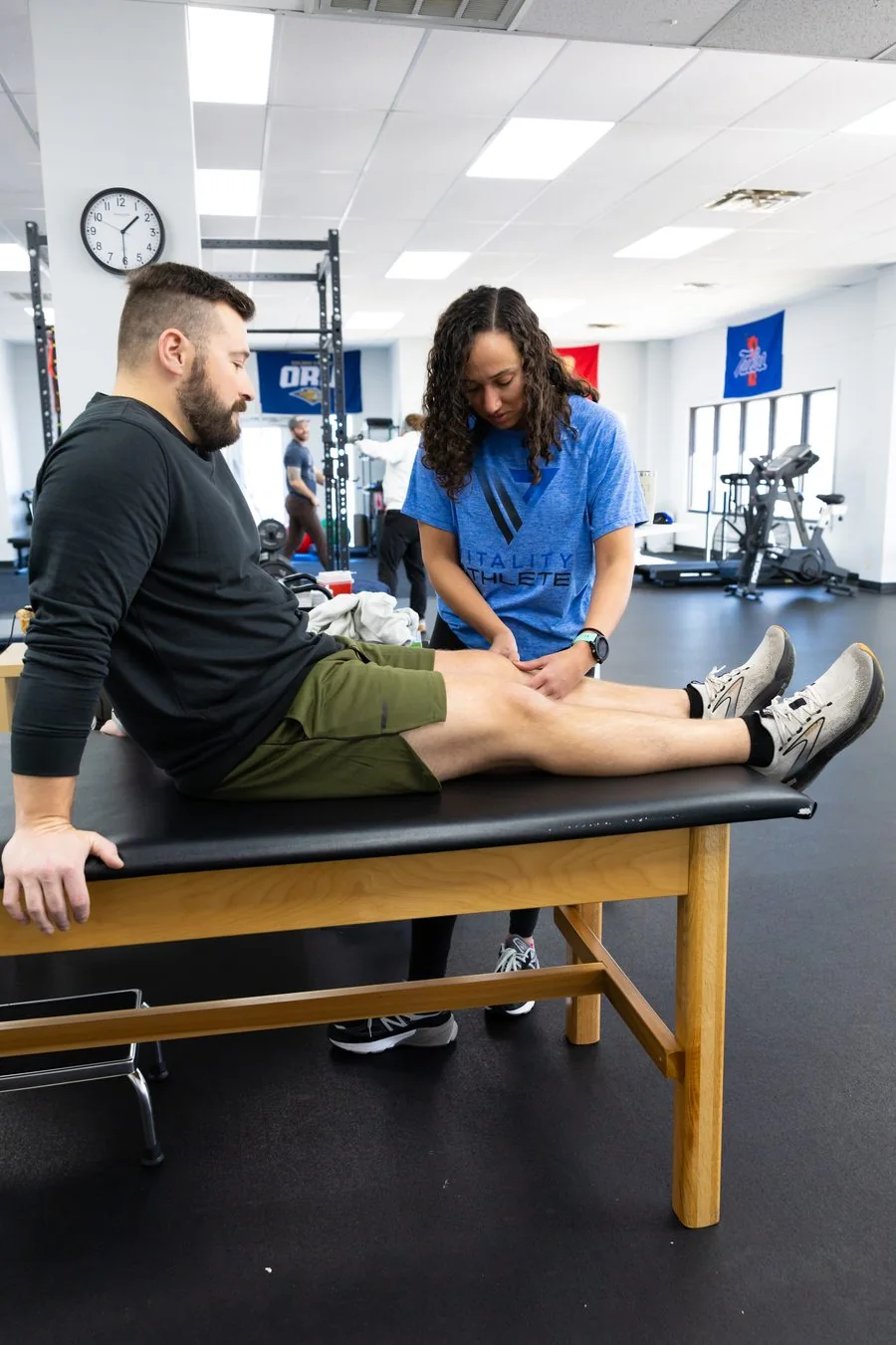
Knee pain doesn't mean you stop training, it means something above or below the knee, your hip, ankle, or running form, is loading it wrong. We find what's actually driving the pain and rebuild it, so you get back to full training instead of just icing and resting around it.
For lifters, runners, and everyday athletes.
Knee pain shows up differently for everyone, a run that ends early, a squat that doesn't feel the same, stairs that make you wince. Here's the cycle almost everyone describes.
“It's fine on flat ground, but stairs and squats are rough.”
Pain that shows up under load“I get a sharp pinch on the outside of my knee a mile into every run.”
The mile marker that always gets you“I've rested it, iced it, rested it again, and it just comes back.”
Relief that never actually lastsKnee pain is rarely a knee-only problem. Weak hips, tight ankles, or a breakdown in your running or squat mechanics often show up as pain at the knee, the joint stuck absorbing the load. Rest quiets it temporarily and leaves the real cause free to keep loading it.
We test your hips, ankles, and running or lifting mechanics together, not just the joint that's sore.
Knee pain is rarely a knee-only problem. We check what's overloading it from above and below.
Running long, squatting heavy, or cutting on the court all load the knee differently, your plan is built around what you actually do.
You don't need to self-diagnose before you call. This just helps you see we've treated exactly this before.
You've been told surgery is the only real option for your knee. We do a full evaluation to see what's actually driving the pain before you commit to something irreversible, especially if you're an athlete who wants to keep training through it.
The knee is rarely working alone. When the hip or low back is compensating too, we look at the whole kinetic chain together, so the plan actually addresses what's overloading the knee instead of chasing the sore spot.
It's not new, and it's not going away on its own. We find the specific weak link that's kept it flaring for months, so it's not just another round of rest that wears off in a few weeks.
You've had surgery, or a knee replacement, and the results or the follow-up PT didn't get you as far as you expected. Our one-on-one, personal-trainer style sessions actually rebuild the strength and range you need, not just supervise reps.
It's quiet at rest and even on short runs, but a few miles in, it shows up, often as a sharp pinch on the outside of the knee. We look at your running mechanics and hip stability together to find what's actually setting it off.
Rest and ice alone almost never fix knee pain for good. They pause the symptom until you run or train again, and the same weak link overloads it. Here's how we actually break that cycle.
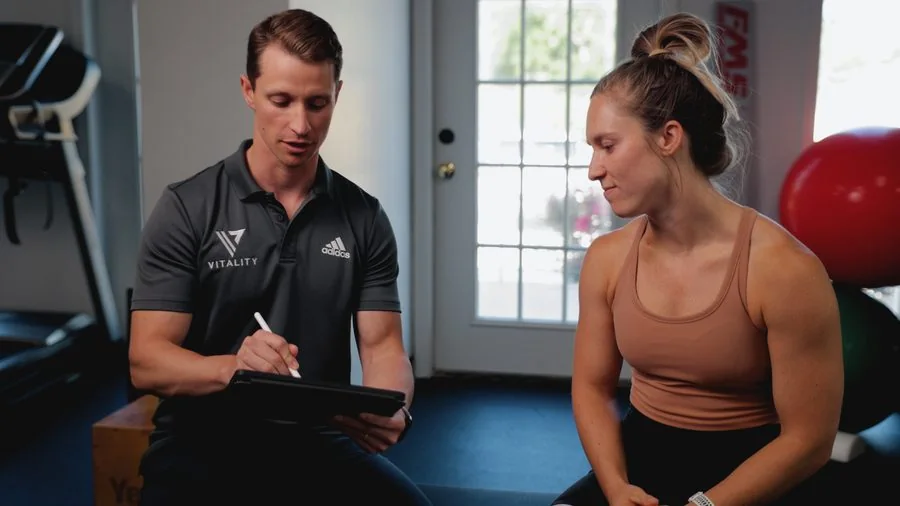
“I was told the only way to fix my knee issue was through surgery. After four months of following Cord's rehab programming, I'm back to squatting, deadlifting, and bench pressing without pain. I thought I'd never be able to barbell squat again.”
Usually not entirely. We'll tell you honestly if a short break or a load reduction is needed, but the goal is almost always to modify your training, not eliminate it, while we fix the underlying issue.
Yes, that's actually one of the most common patterns we see. Rest alone rarely fixes it, we rebuild the hip and ankle strength your training needs so your knee stops absorbing load it wasn't built to take.
It's common for knee pain to actually originate at the hip, ankle, or in your movement mechanics. A full evaluation looks at the whole kinetic chain together, so you're not just treating the spot that hurts while the real cause keeps going.
No. Oklahoma allows direct access to physical therapy, so you can schedule with us without a physician referral. Many knee injuries can be accurately assessed without imaging, and we'll let you know if imaging is warranted after your evaluation.
Rarely. Recurring knee pain usually persists because the root cause, often somewhere else in the kinetic chain, was never identified, just rested until quiet. A thorough evaluation can often uncover what was missed.
A short, low-pressure first conversation. Tell us what you're dealing with and what keeps interrupting it, and we'll help you figure out the next step.