Conditions We Treat How It Works Team Patient Stories Locations See If We’re a Good Fit →

Nothing hurts. You just want to run faster.

The Run Lab pairs a real gait and loading assessment with blood-lactate-derived training zones, so you finally know exactly what to work on: how you move, and how hard you can really work. This is a performance service for healthy runners, not the injury pathway.

For runners chasing a PR, goal-race chasers, and data-curious athletes.

750+ Tulsa runners helped

Testing led by a doctor of physical therapy who races, too

“I went to Vitality to get my running form examined. I was very impressed with the thoroughness and information given during my visit. So much that I purchased follow sessions.”

Ryan R., VTP patient

First, One Quick Question

Are you in pain right now, or looking to improve?

The Run Lab is a testing environment for runners who are training consistently and not hurt. If something actually hurts today, start there instead, testing a compensating runner gives you the wrong baseline.

Running hurts right now.

Knee, shin, Achilles, hip, or IT band pain. Compensating for pain changes how you move, so testing today wouldn't give you an accurate picture. Start with a running-focused evaluation, settle the pain, then come back for testing.

See the running injury page →

Nothing hurts. I want to run faster.

Training consistently, chasing a PR or a goal race, and want real data behind the plan instead of guessing. This is the Run Lab. Keep scrolling to see how the testing works and what the Runner's Program includes.

See the Runner’s Program →
We Hear This Every Week

Sound familiar?

You're not hurt, you're just tired of guessing. Here's what almost every runner who calls us about the Run Lab says.

“I'm putting in the work, I just want to know it's actually paying off.”

Progressing, but no way to measure it

“I train by feel, or whatever zones my watch guessed at.”

No real idea if easy runs are actually easy

“I have a race on the calendar and don't want to blow up or get hurt in the build.”

A goal with no data behind the plan
The gap most runners never test
“I train by feel, honestly. I have no idea if my easy runs are actually easy.” A common answer during intake
Two Questions, Not One

The Run Lab answers what a gait video and a watch guess can't.

Biomechanics and physiology are two separate problems. A runner can move beautifully and still train in the wrong zones. A runner can have perfect zones and still bleed energy through a hip that collapses at mile eight. Testing one and guessing at the other is how runners leave performance on the table.

1

How do you move?

A treadmill running assessment with a wearable sensor system captures your impact and loading, stride and form, stability, and symmetry. This is your biomechanical baseline, not a printout, a doctor of physical therapy explains what it means and what to do about it.

2

How hard can you work?

A graded treadmill lactate test, with blood-lactate samples, heart rate, and effort tracked throughout, gives you individualized zones for easy, tempo, threshold, and high-intensity work. Real zones from real values, not an age-based formula.

The Runner’s Program

Five visits, built around where you are.

This is a menu, not a fixed sequence. Already have a coach or a recent lactate test? Swap that visit for something more useful, a second RunEasi or a second lactate test to track change across a training block is the most common trade.

01Strength & Movement Assessment

A full-body screen for imbalances, weaknesses, and injury risk. This is usually where the likely "why" behind a gait breakdown actually shows up.

02Running Assessment

Treadmill gait and loading analysis with a wearable sensor system. This is your biomechanical baseline, what your run actually looks like, not a guess.

03Lactate Threshold Test

A graded treadmill test with blood-lactate samples, heart rate, and effort tracked throughout, so every easy run, tempo, and interval actually does its job.

04Strength Program Design

A program built from what your assessment and running data actually showed, not a template pulled off a shelf.

05Fine-Tuning Visit

Refine your form and progress the strength plan as you adapt to it.

You'll walk out with a gait report, a zone card with real heart-rate ranges, a written strength program, and a follow-up visit to progress it as you adapt.

Is This You?

Most Run Lab runners fit one of three patterns.

None of these are about pain, that's a different page. This is about performance.

The Runner Ready to Optimize

Training consistently, not hurt, still progressing but training by feel or by whatever zones a watch guessed at. Wants real data behind the plan, not just permission to keep running.

The Runner With a Goal and a Date

First marathon, a big local race, a half in sixteen weeks, a personal best attempt. Wants to not blow up in the back half, and not get hurt during the build.

The “Always One Niggle Away” Runner

Never injured enough for PT, never healthy enough to string together a full training block. If something hurts today, start with a running-focused evaluation first, then come back for testing.

Who this isn’t for: anyone in pain right now (see the running injury page instead), anyone who just wants a training plan (that’s a coach, the Run Lab feeds a coach’s plan with data, it doesn’t replace one), and anyone shopping for a measured VO₂ max test, we don’t offer that. What we do offer is real blood-lactate-derived training zones, individualized to you.
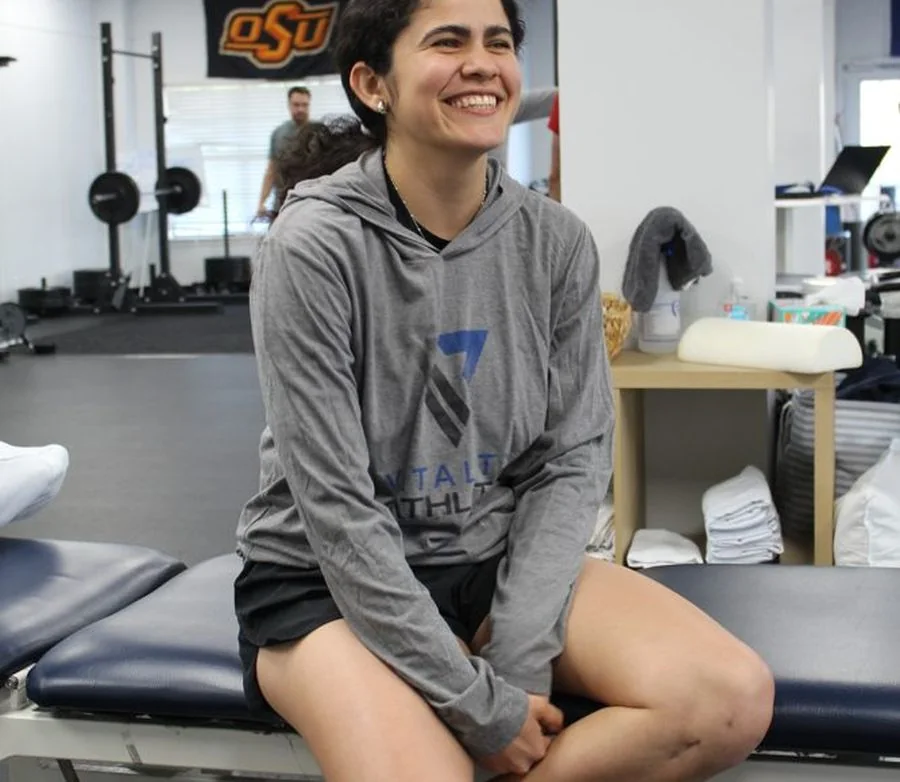
A runner at the Vitality Run Lab
750+ Tulsa Runners

“First time I have had someone zero in on the issues with my running form and provide a plan of action towards fixing it. They helped me loosen up and learn the various stretches and exercises to increase my stability.”

Noah J., VTP patient
Common Questions

Before you book, a few honest answers.

01Do you measure VO₂ max?

No. What we give you is blood-lactate-derived training zones from a graded treadmill test, real values pulled during the session, not a formula based on your age or a predicted number. That's a more direct, individualized way to know your easy, tempo, threshold, and interval zones.

02How long does the lactate test take?

It's booked as a one-hour appointment. The actual treadmill portion, walking or running through graded stages with finger-prick blood samples along the way, is typically around 15 minutes.

03I already have a coach. Is this still worth it?

Often, yes. The Run Lab isn't a replacement for a coach, it's data your coach can build a smarter plan around. Plenty of runners bring their gait report and zone card straight to their existing coach or training plan.

04Something hurts a little, but I'm not sure it's a real injury. Can I still do the Run Lab?

If you're compensating for pain, even a little, it changes how you move and skews the assessment. Start with a running-focused evaluation to settle that first, then come back for accurate testing.

05Do I need a referral first?

No. Oklahoma allows direct access to physical therapy, so you can book directly with us without a physician referral.

Ready to see how you actually run?

A short, low-pressure first conversation. Tell us about your training and your goals, and we'll help you figure out which visits make sense for you.